

Are acrylic risers more durable than glass risers?
Jan 05, 2026
Leave a message
In the realm of retail and display solutions, the choice between acrylic risers and glass risers is one that retailers and display designers frequently grapple with. As a trusted Acrylic Riser supplier, I've encountered numerous customers seeking clarity on which option is the more durable choice. In this blog, we'll delve into the science and practicalities to help you make an informed decision.
Understanding the Basics
First, let's establish what exactly acrylic and glass are. Acrylic, also known by trade - names like Plexiglas, is a type of plastic. It is made from polymethyl methacrylate (PMMA), which is a synthetic polymer. Glass, on the other hand, is traditionally made from silica (sand), soda ash, and limestone, melted at high temperatures and then cooled rapidly to form a solid.
Physical Properties Comparison
Strength and Impact Resistance
One of the most important factors when considering durability is strength and impact resistance. Glass is brittle by nature. It has a certain level of tensile strength, but when subjected to a sudden impact, it is prone to shattering. A minor drop or a collision can cause glass to break into sharp pieces, which not only endangers the product being displayed but also poses a significant safety hazard to customers and staff.
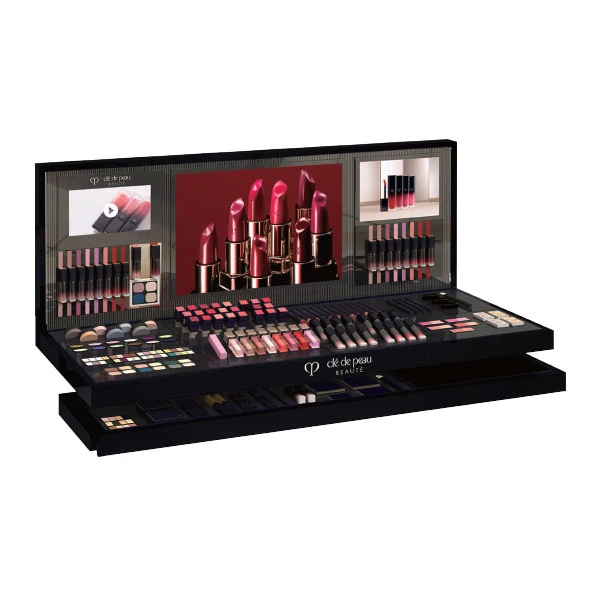
Acrylic, in contrast, is much more impact - resistant. It can withstand a greater amount of force before breaking. In fact, acrylic can be up to 17 times more impact - resistant than standard glass. This makes acrylic risers a great choice for high - traffic areas where accidental bumps and knocks are more likely to occur. For example, in a busy store with a Retail Makeup Display Stand, an acrylic riser is less likely to break if a customer accidentally brushes against it.
Scratch Resistance
Another aspect of durability is scratch resistance. Glass is generally more scratch - resistant in comparison to acrylic. However, this doesn't mean that acrylic is easily scratched. Modern acrylic materials can be treated with scratch - resistant coatings to enhance their durability. These coatings can significantly reduce the likelihood of scratches, making acrylic risers suitable for long - term use.
In a retail environment, where products are constantly being moved on and off the display, scratches can make a display look unprofessional. For a Coffee Display Stand, if the riser is scratched, it can detract from the overall aesthetic appeal of the coffee products on display. While both materials can be vulnerable to scratches over time, with proper care and the use of scratch - resistant acrylic, the visual integrity of the display can be maintained.
Chemical Resistance
Retail environments may expose risers to various chemicals, such as cleaning agents. Glass has excellent chemical resistance. It can withstand most common cleaning agents without any significant damage. Acrylic, however, is more sensitive to certain chemicals. Solvents, for example, can cause acrylic to dissolve or develop a hazy appearance.
That being said, with the right choice of cleaning products, this is not a major issue. Non - abrasive and non - solvent - based cleaners should be used when cleaning acrylic risers. By following proper cleaning protocols, acrylic risers can maintain their appearance and durability in a chemical - exposed environment.
Environmental Considerations
Temperature Resistance
Both acrylic and glass have different temperature resistance properties. Glass can withstand extreme temperatures better than acrylic. It doesn't deform easily under high - heat conditions, making it suitable for environments where temperatures may fluctuate greatly. For example, in a store with a large window where sunlight can cause the temperature to rise significantly during the day, glass may be more stable.
Acrylic can soften and deform at relatively lower temperatures compared to glass. However, most retail environments are climate - controlled, so this is often not a major concern. If an acrylic riser is exposed to high heat, it needs to be designed and manufactured to handle the expected temperature range.
Moisture and Humidity
In terms of moisture and humidity, glass is not affected at all. It doesn't absorb moisture, so it won't warp or degrade when exposed to a humid environment. Acrylic, while generally resistant to moisture, can be affected in very high - humidity conditions over a long period. It may develop a milky appearance or become more prone to scratches. But again, in well - ventilated and climate - controlled retail spaces, this is usually a non - issue for Acrylic Risers.

Long - Term Cost and Maintenance
Initial Cost
The initial cost of acrylic risers is typically lower than that of glass risers. This is especially beneficial for small - to - medium - sized retailers who are looking to optimize their display budgets. The lower cost allows for more flexibility in creating multiple displays or upgrading existing ones.
Replacement and Maintenance Costs
As mentioned earlier, acrylic is more impact - resistant, which means fewer replacement costs due to breakage. In the event that an acrylic riser does get damaged, it is often easier and less expensive to replace compared to a glass riser.
Maintenance costs for acrylic are also relatively low. While it requires the use of specific cleaning products, the cleaning process is straightforward. Glass, on the other hand, may need more frequent cleaning to maintain its clarity, especially in high - dust or high - traffic areas.
Aesthetic and Design Considerations
Clarity
Both acrylic and glass offer high levels of clarity, but they have slightly different visual qualities. Glass has a pristine, crystal - clear look that gives a sense of luxury and sophistication. However, acrylic can also provide excellent clarity, and it can be produced in a variety of finishes, such as matte or textured, which can add a unique aesthetic touch to the display.
Design Flexibility
Acrylic is much more flexible in terms of design compared to glass. It can be easily molded, cut, and shaped into various forms, including complex geometries. This makes it possible to create custom - designed Acrylic Risers that can perfectly complement the products being displayed. For example, if you are displaying high - end makeup with unique packaging, an acrylic riser can be customized to match the style and colors of the makeup brand.
Conclusion
In general, acrylic risers are more durable in terms of impact resistance, and they offer a cost - effective and design - flexible solution for retail displays. While glass has its own advantages, such as high scratch and chemical resistance, in a real - world retail environment where safety, cost, and design flexibility are important factors, acrylic risers often come out on top.
If you're interested in enhancing your retail displays with high - quality Acrylic Risers, we'd love to discuss your specific needs. Whether you need a simple display for a coffee shop or a customized solution for a high - end makeup brand, our team of experts can work with you to create the perfect display. Don't hesitate to reach out for a consultation and start taking your retail displays to the next level.
References
- "Plastics in Packaging: Properties, Processing, Quality, and Applications" by A. Isayev and A. A. Bugdayci
- "The Chemistry of Glasses" by J. E. Shelby
- "Retail Store Design and Visual Merchandising: Creating the Customer Experience" by Brenda K. Zimmerman and Anita M. Bower